Blog Post
March 24, 2026
How to Leverage AI in Policy Communications
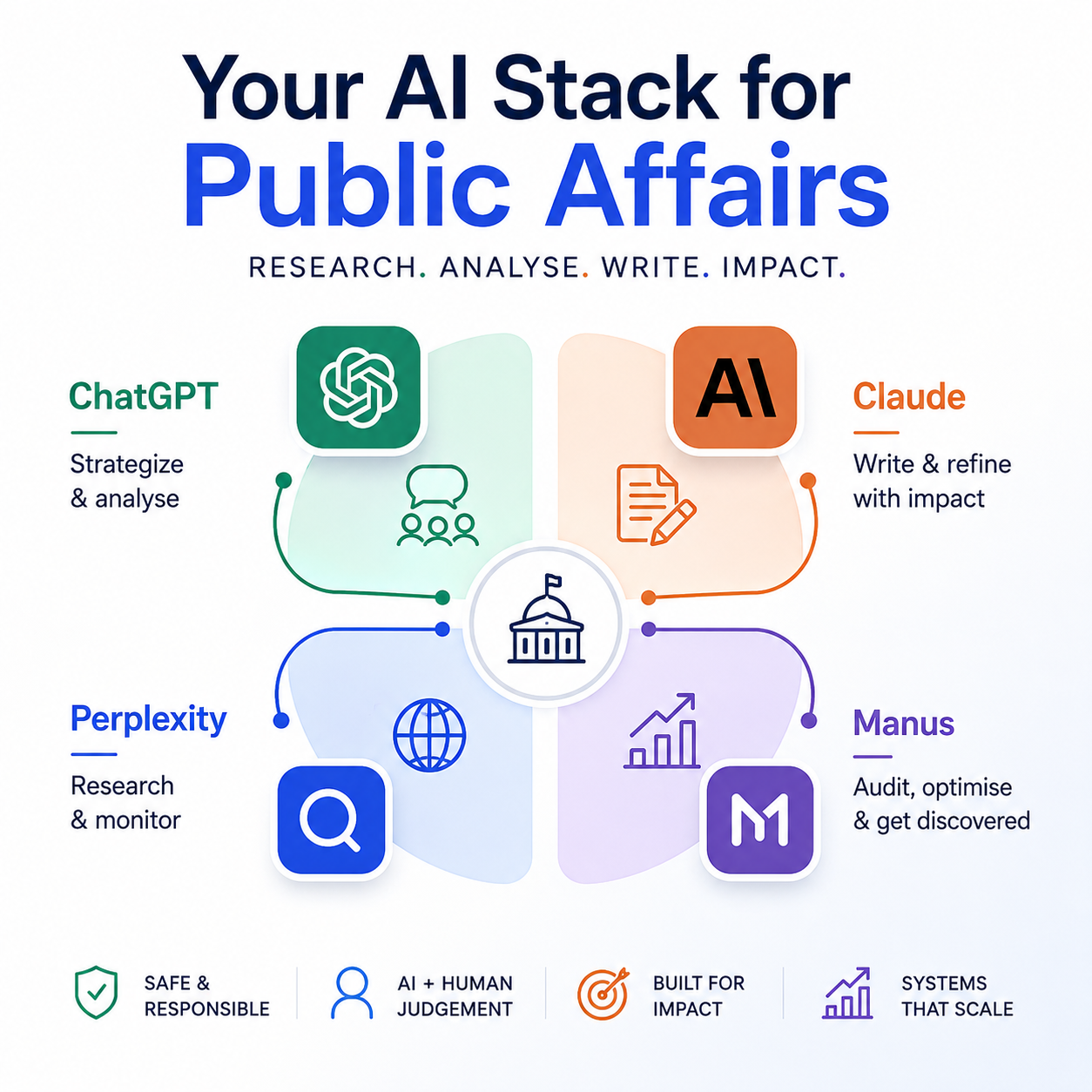
Policy communications teams need to start using AI in ways that are practical, safe and genuinely effective.
Policy communications teams need to start using AI in ways that are practical, safe and genuinely effective.
Why policy communicators can't afford to ignore AI anymore
Policy communications is a precision discipline. The wrong word in a policy brief, a message that lands badly with a key stakeholder, a crisis response that's one hour too slow: the margins for error are thin and the consequences are real.
AI doesn't eliminate those risks. But used well, it compresses the time between information and action, between idea and output, between signal and response. Most of our clients are asking how to use AI without exposing themselves to new risks in the process.
The first step starts with understanding what AI is genuinely good at in this context, and where the human still has to lead.
1. Drafting is faster, but editing is where the value is
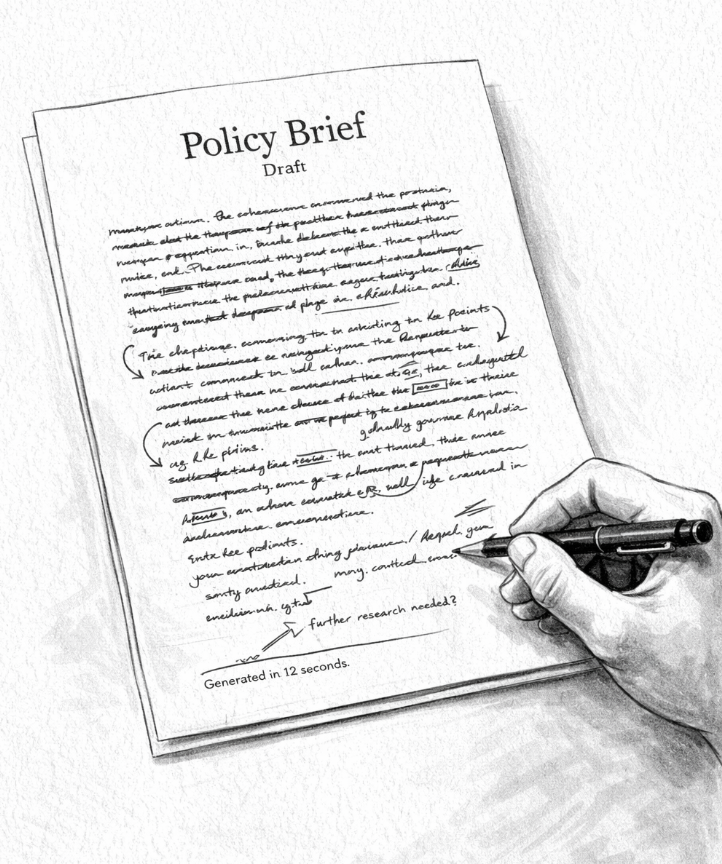
AI can produce a first draft of a speech, an op-ed, a newsletter, or a stakeholder briefing in minutes. That's useful. What's more useful is understanding that the draft is a starting point, not a finished product.
Policy communications requires accuracy at a level that AI alone can't guarantee. Legislative references need to be correct. Institutional positions need to reflect what was actually agreed. Quotes and attributions need to be verified.
The professionals who get the most out of AI-assisted drafting are the ones who treat the output as raw material: faster to produce, but still requiring a trained human eye for nuance and accuracy. In our trainings, we see the biggest gains when teams stop debating whether to use AI for drafting and start building clear editorial review steps into the workflow.
2. Turn dense policy documents into content people actually read
One of the most underused applications in policy communications is using AI to translate complex material into accessible formats. Think about a 200-page impact assessment, a trilogue compromise text or a technical policy document. Most stakeholders will never read them. That doesn't mean they don't need to understand what's in them.
AI can extract the key points, reframe them for a non-specialist audience, and produce a summary, a social post, a briefing note, or a visual outline in a fraction of the time it would take a team working manually. The political interpretation still requires a human, but teams that build this storytelling capacity into their workflow will find they can reach broader audiences with the same, and sometimes limited, resources.
3. Monitor what matters, and stop drowning in noise
Legislative monitoring, media tracking, sentiment analysis across social platforms and news sources: these are tasks that used to require either a large team or an expensive external subscription. AI reduces both requirements significantly.
You can now set up monitoring workflows that surface relevant legislative developments, track how your issue is being covered across languages and geographies, and flag shifts in stakeholder sentiment before they become problems. The keyword is surface. AI identifies signals for a human to assess to understand what a particular development means politically, who it affects, and what the right response is. What AI removes is the hours spent manually scanning for the signal in the first place.
4. Brainstorm campaign ideas before you commit to any of them
One of the most valuable things AI can do in policy communications is help you stress-test ideas before resources are committed to them. Campaign concepts, messaging angles, coalition narratives: all of these benefit from being challenged early, when changing course is cheap.
Use AI as a thinking partner at the early stage. Ask it to consider alternative routes that a similar organisation would take, identify weaknesses in your current angle, or simulate how different audiences might interpret the same message. What we've seen working with teams across the EU is that this kind of structured brainstorming session, run with a well-defined prompt, surfaces objections and blind spots that would otherwise only emerge after the campaign launches. And that's a costly place to find them.
5. Anticipate crises before they arrive
Crisis communications in policy is largely about preparation. The teams that respond well to a sudden regulatory development, a damaging media story, or a stakeholder reversal are rarely the ones who are fastest on their feet in the moment. They're the ones who mapped the scenarios in advance.
AI can help you do that mapping at a level of detail that was previously too time-consuming to justify. Feed it your current positioning, your known vulnerabilities, your stakeholder landscape, and ask it to identify the three most likely crisis scenarios and the early warning signals for each. Then build response frameworks before you need them. You’re not predicting the future here, you’re avoiding being caught completely unprepared when a foreseeable situation unfolds.
6. The “human in the loop” is not optional
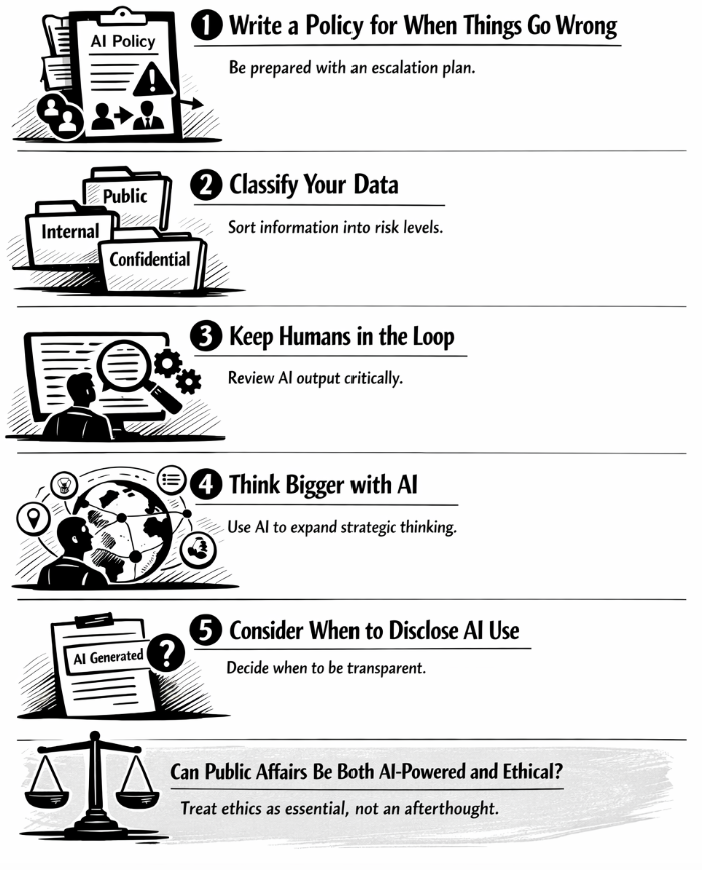
Every capability described above depends on one condition: a skilled human staying actively involved.
AI in policy communications lacks political awareness. It doesn't know which commissioner is sensitive about a particular file, which MEP is looking for an opportunity to complicate your client's position or which phrase will read as tone-deaf given what happened in the news cycle three days ago. It can't replace the judgment that comes from years of working in a specific institutional environment, building relationships, and reading rooms that no model has ever been in.
What AI can do is handle the volume, the structure and the speed so that the human involved can focus their energy where it actually matters. This is the right division of labour where an AI tool creates the space for better thinking.
Can AI make you a better policy communicator?
Yes, but only if you treat it as a tool that amplifies your expertise rather than one that substitutes for it. The professionals who are using AI most effectively in policy communications right now are the ones who have learned precisely where to intervene, what to question and when to override AI outputs entirely.
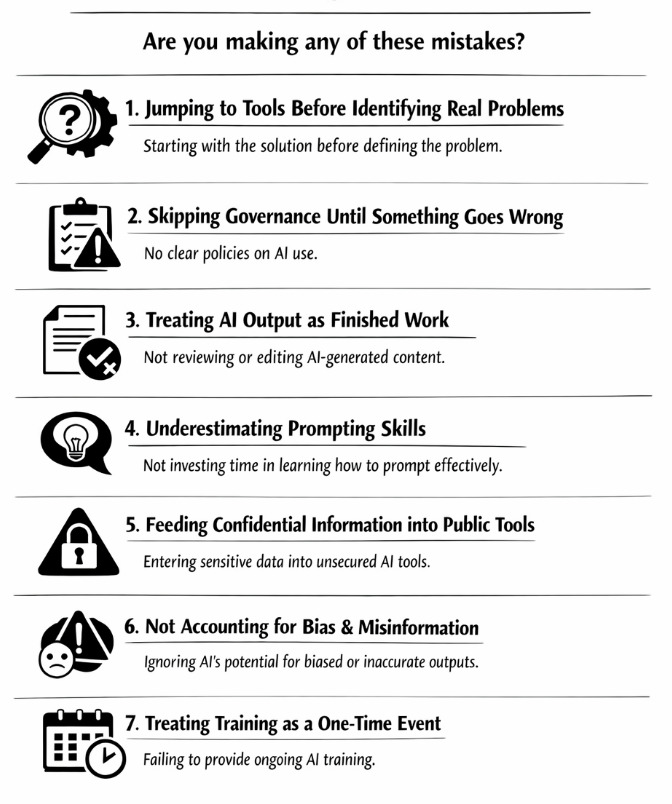
From working with policy and public affairs teams in 8 countries, we've learned that the gap between teams using AI well and teams using it badly almost always comes down to one thing: whether people have been properly trained to work with it. Not just introduced to the tools, but genuinely skilled in how to prompt, review, and apply critical thinking to what comes back.
If your team is ready to build that capability, we offer practical workshops designed specifically for policy communications professionals who want to use AI with confidence.